Tourism in India is a tale of amazing potential, confusing paradoxes, missed opportunities and massive under utilisation of resources. Compared to rest of the tourist hotspots around the world, India has mind boggling variety of tourist attractions of all types which can attract almost every single type of tourist out there. Ancient archaeological heritage of India which goes back to nearly 4000 years is spread all over India, from Laddakh to Kanyakumari.
India is blessed with such awe inspiring ancient monuments at a scale unrivaled by any other country in the world. Forts of Rajput rulers in Rajasthan, artful temples of Bundels, luxurious monuments constructed by Mughals, amazingly beautiful Konkan temples are just a small fraction of this wealth spread across it’s length and breadth. Adventure tourists have some of the best and virtually untouched destinations in Laddakh, Himachal Pradesh, Uttranchal, Sikkim, Mizoram and other north-eastern states . Wild life enthusiasts have the option of seeing some of the rarest wildlife not found anywhere else in world in Gir, Jim Corbett and many other national parks.
Adventure tourism, specially in north-eastern states has a lot of potential but hasn’t been explored even partially. The north-eastern states states have some of the best places for adventure activities like trekking, mountain climbing, camping and much more. Culinary tourism in India which has the biggest potential is just a small speck. Considering the vast culinary diversity of India, the country should be the top destination for all foodie tourists.
So many religions like Hinduism, Sikhism, Jainism and Buddhism originated in India and their followers from all over the world wish to visit places important to their faiths. Medical tourism in India due to high quality healthcare at very low prices attracts people from all over the world. Culture and food junkies can’t find any place better than India with it’s diversity in languages, people, food, music, literature and culture which go back thousands of years. To top that, India is one of the cheapest tourist destinations compared to most of western countries. There is no other country in the world which offers so much diversity in such a package. Anyone would think that with so many blessings, India would be the tourist hub of the world. To top it all, India is one of the cheapest destinations in the world for tourists.
In 2011, 62 lakh foreigner tourists arrived in India. Tourism sector in India employs nearly 4 crore people and is $ 121 billion dollar industry. Seems impressive, only till compared to 2.5 crore tourists per year Malaysia which has little to offer except beaches and and cheap shopping. Top tourist destination in world is France with 8.2 crore tourists in 2011 and 8.3 crore in 2012. India is not even in top 10 tourist destinations in world or even Asia. It’s actually ranked 38, preceded by countries like Saudi Arabia, Thailand, Egypt and even Tunisia. Just for sake of perspective, go through the following list:
( 1 million = 10 lakh, 100 lakh = 1 crore)
Country No. of tourists
Tourism in India is more than just Taj Mahal, Chandratal Lake, Spiti
Turkey 3.5 crore
Morocco 92 lakh
Tunisia 69 lakh
South Africa 80 lakh
China 5.8 crore
Saudi Arab 1.7 crore
Egypt 94 lakh
Thailand 1.9 crore
Looking at these figures, one can’t help but wonder what is wrong with Indian tourism sector. It’s not that people around the world are unaware of what India has to offer. Established travel forums like TripAdvisor and Lonely Planet are full of foreigners discussing and asking for information related to travel in India. Sections related to India are the ones with maximum number of posters. On Tripadvisor, India section has more than 10000 threads, exceeded only by 15000 threads of Thaliand. A lot people from all over the world wish to visit India but are turned away by numerous factors.
Some of such issues are:
1) Complicated visa procedures: Infamous Indian red tape and bureaucracy is a nuisance outside the country too. Unlike other tourist hotspots, India makes it much more difficult and expensive for tourists to get a visa. India offers on arrival visa to only a handful of countries including Finland, Japan, Luxembourg, New Zealand and 4-5 others. In comparison, Malaysia offers on arrival visa to majority of countries except Israel, India, China and some African countries.
2) Bad infrastructure : Even though rapid development is happening, India is still a long way from having a world class tourist infrastructure.
3) Safety : Image of India has taken a severe beating recently due to various factors. Pakistan sponsored terrorism in various parts of India is also a big turn 0ff.
4) Lack Of Promotion Unlike other countries where governments and private organisations, spend large amounts of money and effort to promote tourism in their own countries, Indian efforts in this case have been very limited. Incredible India campaign which was launched with much fanfare a few years back ran out of steam pretty quickly.
Above mentioned points are not unique to just India. A lot of countries face similar problems, have very little tourist attractions but still manage to attract many more tourists than India. We need to learn from them and make necessary changes as soon as possible. Some recent high profile projects like Golden Quadrilateral Highway project, Delhi Agra expressway, high speed trains with bio toilets etc are steps in right direction. But a lot more needs to be done. A lot of our customers are solo travelers, men and women of all ages. Some of them spend months or even years traveling inside India without facing any problem. But the recent bad press and selective reporting has messed up image of India badly. In an industry where perception counts for a lot, an effort has to be made to promote the attractions and good points of India rather than just the bad news.
Development of infrastructure accompanied by positive publicity should be the top priority for us. There have been small baby steps, but what we need is a sustained organised effort.
The cuisine of Jharkhand is not very different from its neighboring Bihar. The food of Jharkhand is very light on the stomach and easy to digest. Dhuska is a popular deep fried snack eaten in Jharkhand. The main ingredients of the dhuska are powdered rice, chana dal powder and boiled potatoes.The bread is then deep fried. It is often served with any sauce or chutney. Dhuska is mostly made at the streets where people enjoy it as a snack . Handia is a rice beer popular in the Jharkhand.The making involves the use of ranu tablets, which is a combination of about 20-25 herbs and acts as a fermentor.The ranu tablets are then mixed with boiled rice and left to ferment. It is served cool and has lower alcoholic strength than other Indian liquors. Meetha Khaja is an item which is prepared in almost every household and then exchanged with their friends and relatives during the festive season. It is synonymous to Diwali in the state. This luscious dessert is made maida and sugar syrup and is a must try for all the sweet tooth out there. Pitha are typically made of rice flour, although there are some types of pitha made of wheat flour.The less common types of pitha are made of palm root. Pithas are primarily made from a batter of rice flour or wheat flour, which are shaped and optionally filled with sweet or savory ingredients. itha are typically made of rice flour, although there are some types of pitha made of wheat flour.The less common types of pitha are made of palm root. Pithas are primarily made from a batter of rice flour or wheat flour, which are shaped and optionally filled with sweet or savory ingredients. Rugra is indigenous variety of mushroom and is very delicious to eat. It rich in protein and minerals and high on calorific value. This dish is preferred by the local people and is high in demand during the peak season of Monsoon.
Haryana is one of the wealthiest states in India with kindhearted people. The occupation of the majority of the people is agriculture and dairy. Predominantly, Haryanvi diet is a vegetarian one and they consume a lot of milk and ghee. Haryana is also referred to as ‘The Land of Rotis”. Alsi ki Pinni is prepared with alsi (flaxseed), whole wheat flour, sugar, ghee, nuts and cardamom powder. This sweet is not only delicious but also very healthy. Alsi is high in fiber, omega 3, iron and potassium among others. Bajra Aloo Roti is prepared with a mix of bajra flour, mashed potatoes, ginger garlic paste, coriander leaves, garam masala. It is served hot with white butter with raita as accompaniments. It tastes heavenly and just melts in the mouth. Hara Dhania Cholia is a mix of green chickpeas and variety of vegetables. It is prepared with onion, tomato, red chili powder, cumin seeds, coriander leaves and turmeric amongst others. It is a rare and unique combination that is popular in Haryana and is eaten with chapatis or paranthas. Meethe Chawal or sweet rice are prepared using basmati rice, ghee, and sugar along with some cardamom and saffron. Basmati rice grown in Haryana is the best. The dish is very famous and is served during Basant Panchami festival.Every individual must try it at least once.
Indian Food Blog: Himachal Pradesh The snow-clad mountains, lush green valleys, the freshness in the air, tranquillity in the environment, these are a few things that describe Himachal Pradesh at its best. From the road vendors to the authentic cafes and restaurants, Himachali people will pour their hearts out in their dishes. Akotri is made with buckwheat mixed with wheat that is usually prepared on occasions of festivities.The thought of a buckwheat cake might not sound so great but is both scrumptious and healthy. With the goodness of ghee, it provides you with enough nutrients and calories to survive a good hike. Sidu is a local bread made from wheat flour. The flour is kneaded and set aside for some hours for the yeast to settle and the dough to rise. The dough is put on the bonfire to be par-cooked and then later steamed to complete the cooking. This distinct bread is usually enjoyed with ghee . Ambal has mouth-watering taste due to the mixed sweet- sour flavours. Ambal is pumpkin dish usually served with rice and rajma. The dish is neither totally liquid nor totally dry. This dogri dish packs a lot of flavours and is a must try during the winters. Madra is a delicacy that belongs to Chamba district of Himachal Pradesh. This dish consists of the soaked chickpeas or vegetables. Madra is one of those dishes that represents the food culture of Himachal Pradesh and is available at every restaurant, and on festivals, offered to you with utmost love. Rajma Chawal is a delicious dish and contains good quality of carbohydrate and protein that can suit your taste. This popular dish is loved by people of all age groups. Rajma Chawal is perfect for a Sunday brunch or on a get-together with family and friends. It is cooked by using rajma(kidney beans) rice, onions, tomatoes and melange of spices. Kheru is a very tasty and authentic himachali dish. It is served for breakfast, lunch or dinner. Kheru is prepared with sour curd, coriander seeds, onions. Kheru is usually served with piping hot rice but can also be eaten with rotis or parathas. Sepu Vadi is simply a mouth watering dish. Sepu Vadi is cooked mostly on wedding occasion in Himachal Pradesh .Normally this dish is made with spinach , curd gravy and split Urad Dal.
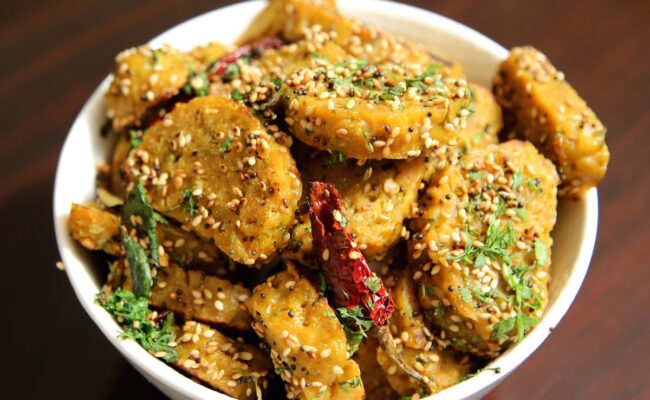
Gujarati food is more than just Dhokla. North Gujarat, Kacch, Kathiyawad and Surti Gujarat are the four major regions of Gujarat and each of these bring their own uniqueness to Gujarati cuisine. Dabeli, Kutch dabeli or double roti is a popular snack food originating in the Kutchof Gujarat. Dabeli literally means “pressed” in Gujarati.It is made with mixing boiled potatoes with a special masala and served with chutney, pomegranate and roasted peanuts. Fafda is a popular Gujarati snack. Fafda is usually yellowish in complexion. It is eaten with a chutney and salty fried-green chilis. Jalebi is sweet and crunchy making this sweet-savoury dish a favourite. Khaman is a food common in the Gujarat , made from soaked and freshly ground chana dal .The final touch to the soft and fluffy khaman is added with a garnishing of sesame seeds, mustard seeds, coriander leaves. It is a variant of Dhokla and has a lighter colour. Khichu is a dough for making papad made from rice flour, however, a few other flours are also used. The snack is prepared by cooking flour in water like porridge with cumin seeds and an alkaline salt known as Papad Khar.The name khichu is derived from the ductile nature of the dough. Khandvi consists of yellowish, tightly rolled bite-sized pieces and is primarily made of gram flour and yogurt. Khandvi is readily available across India and is commonly eaten as an appetizer or snack and is served with garlic chutney. Muthia is a staple of Gujaratis.The name is derived from the way it is made, from the ‘gripping’ action of the hand. Muthia assembles a shape of sausage. The inclusion of fenugreek makes Muthia good for bowel movement. Sev Tameta is made using juicy tomatoes served with heaps of besan sev. The gujrati version of the dish is a bit sweeter with the inclusion of jaggery.
Assam offers just the right kind of flavours to tickle your taste buds. With a wide variety of indigenous food to offer, Assamese food is famous for its distinct flavoring and influences. Delicious pork, chicken and mutton dishes are a must try. Baanhgaj or Lagot Kukura is essentially chicken cooked with bamboo shoots and lentil.The dish goes well with rice and it can be garnished with chopped green chillies and onions. Khaar is truly a unique Assamese preparation. Khaar is a heartwarming dish made with vegetables and pulses and the main ingredient being meat, fish or even duck. Even dried banana leaves which imparts burst of unexpected yet refreshing flavors. Lucchi is prepared by deep frying a roti made up of white flour, without making it crisp. It is served with a delicious potato curry. Lucchi is also known as Poori in other parts of the country. Masor Tenga is slow cooked fish with a broth made from outenga, tomatoes, and lemon and offers an extremely tangy refreshing flavour once done. Every Assamese definitely loves Masor Tenga. Payash is made using Joha rice and is loaded with ghee, dry fruits, and milk. Cooked on a low flame, one can also add cardamom and saffron for garnishing the dish. Overall, it is a must try dish for all those with a sweet tooth.
Arunachal Pradesh street food differs from tribe to tribe. As one move toward the eastern side of Arunachal people are dependent on bamboo and other leafy vegetables which are strictly boiled. Fried food is not as popular as people like to eat either boiled or smoked food. Apong is a type of rice beer, which is traditionally prepared by tribes of Arunachal Pradesh.India. Apong is prepared by fermenting rice. The two types are Nogi Apong and Poro Apong.The two apongs differ in their taste and colour. Chura Sabji is a kind of curry made of fermented cheese made by either yak milk or cow’s milk and not to forget the most important the flakes and a few pieces of the King chilly which makes it spicy but delicious. Lukhter is another delicacy of the Arunachal Pradesh.Lukter is a combination of cooked dry meat and chilli flakes from the King chilly or Bhut Jolokia. Like the norm goes with Aunachal, this is a side dish meant to be eaten with rice. Pehak is made by use of fermented Soybean and King chilly. In this dish, the king chilli is used as the main ingredient. It is also used as a side dish with rice. The pickle is hot and very spicy that gives the rice a very unique hot flavor. Pehak is very popular among Arunachalis. Pictures sourced from various sources on internet. Please contact for credits.
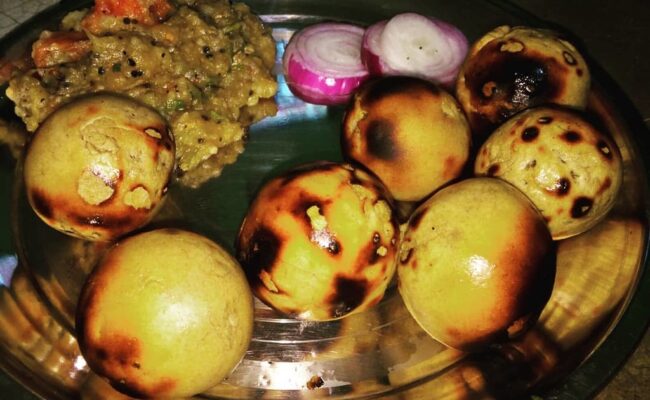
The cuisine of Bihar is largely similar to North Indian cuisine but has influences from other East Indian cuisines especially Bengali cuisine. The scrumptious and exotic Bihari dishes are highly capable of tingling the taste buds of every food connoisseur. Khaja is deep fried in oil and the ingredients use is wheat flour, sugar, mawa. It is very crispy. It tastes amazing when it melts in the mouth and its wafery texture makes it very tempting. It is known for its puffiness. Laung latika is a traditional dessert of the food of Bihar. At the centre is clove which makes it stand apart from the others. The pungent taste of the clove with the sweet stuffing dipped in sugar-syrup melts in the mouth. The complex amalgam of tastes altogether makes Laung Latika exclusive to Bihar. Litti Chokha can be considered as the dish of Bihar. It was started as a meal of poor and then was sold on carts on the street Chokha is prepared by mashing boiled vegetables ,adding spices and chopped onion, garlic etc and served with Litti as a complimentary delicacy. Malpua is a popular dessert sweetmeat that can be found in Bihar.It involves mixing flour, milk, sugar and mashed bananas and deep frying them so that the edges get crispy while the centre is still soft. Thekua is the most commonly prepared snack of Bihari food. It is a mixture of wheat flour and jaggery .One can also use rice flour instead of wheat flour and sugar instead of jaggery to make different varieties of Thekua. Tilkut is made from sesame seeds and jaggery makes its taste more flavored. Tilkut is cooked with a sugar base rolled into a ball filled with copious amounts of crushed sesame seeds. The tilkut gets tastier, softer with sesame seeds.